
Innovation projects
Aguas de Alicante is committed to innovation in all areas of its work, ranging from research into basic processes to the application of the most advanced solutions, thanks to technological monitoring. Its extensive experience in developing and incorporating cutting-edge technologies and solutions enables Aguas de Alicante to stay at the forefront and offer better service. In line with the Sustainable Development Goals, we believe that technological advancements and investment in scientific research and innovation are essential to finding permanent solutions to economic and environmental challenges.
Thus, in recent years, Aguas de Alicante has worked on more than 26 projects, covering solutions related to leak detection and location, energy optimization, flood prediction and mitigation, asset management, consumption efficiency, resource reuse, safety and health…
A key aspect in the development of innovation projects is collaboration with other companies and organizations, such as universities, technology centers, or administrations, both local and international. This strategy has allowed us to tackle larger-scale projects, play an active role in knowledge forums, and work within the framework of European programs for innovation development.
Some examples of innovation projects developed in recent years are:
-
Controlled Test Environment (sandbox) of the Integral Water Cycle

This project has been funded with €115,735 by the competitive grant program of the Agència Valenciana de la Innovació (AVI) with community financing through the European Regional Development Fund (ERDF) Program, Valencian Community 2021-2027.
The main objective of the project is the launch of the first Sandbox in the Integrated Water Cycle, focusing on how to apply digitalization to improve the integrated water cycle in the six cities served by Aguas Municipalizadas de Alicante: Alicante, Sant Joan d’Alacant, San Vicente del Raspeig, Campello, Monforte del Cid, and Petrer. The project duration covers the period 2023-2025.
Specific objectives:
-
Promote new solutions aimed at achieving the objectives proposed by AMAEM regarding the management and efficiency of water resources.
-
Provide AMAEM with a new cutting-edge innovation tool and its management, development, and application methodology.
-
Offer the ecosystem a low-risk testing space to foster new investments.
-
Strengthen Alicante’s position as an innovative city.
Additionally, it should be noted that there are no precedents for a Sandbox in the integrated water cycle. There are, however, precedents—two in the Valencian Community, Valencia and Alcoi—of sandboxes applied to Local Administration. There are also other experiences such as the Mobility Laboratory in Madrid or the financial sandbox. The proposed sandbox would be the first in the field of integrated water cycle management.
Expected results
-
Drafting of the first Sandbox Guide in the integrated water cycle in Europe
-
Design of the strategy, management model, and action plan of the AMAEM sandbox
-
Training in enabling technologies for AMAEM staff and companies, collaborators, and staff from SVI centers
-
Funding Guide for the first sandbox call in the integrated water cycle
-
Launch and implementation of the first AMAEM sandbox in the integrated water cycle
Below are the two main documents for participation in the AMAEM Sandbox:
- Selection and participation guidelines in the AMAEM Sandbox
- Description of the challenges of the 1st call
-
-
B3CLab, a project supported by the Valencian Innovation Agency
Sustainable solution for water sampling in quality control laboratories based on biopolymer bottles
Do you know how many plastic containers we generate and discard in our laboratories? Would it be possible to replace these plastic containers used up to now with biodegradable or biocompostable bottles, and thus avoid the generation of microplastics, emerging contaminants potentially harmful to the environment?
As part of its commitment to innovation and the environment, Aguas de Alicante, together with AIMPLAS, the University of Alicante, Labaqua, and Assur Medical, has developed the B3CLab project.
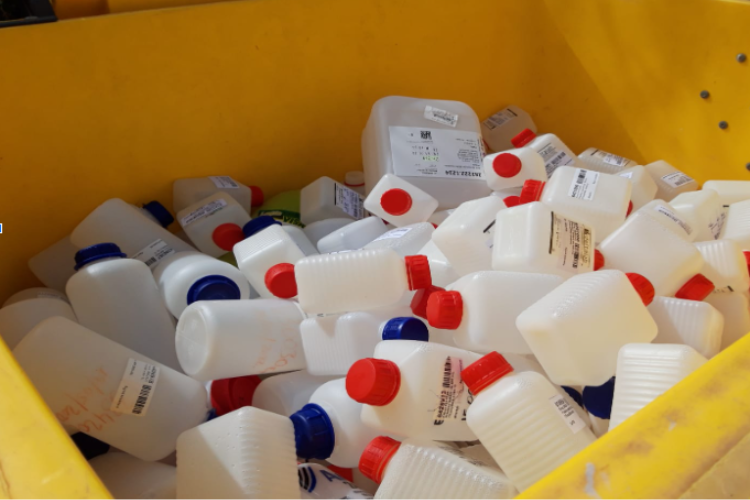
With a global budget of 612,139.89 euros, the project has a grant awarded by the Valencian Innovation Agency (AVI) of €455,940.89 corresponding to the 2023 Strategic Projects in Collaboration call, funded through the European Regional Development Fund (ERDF) 2021-2027. The proposal focuses on replacing the polymers commonly used in the containers employed by quality control laboratories, which come from non-biodegradable petrochemicals, with biobased and biodegradable polymers. A biobased polymer (bio origin) is one that originates, wholly or partially, from biological material; it can come from trees, crops, grasses, algae, or other plant-based residues.
The importance of this initiative is evident when considering that in Alicante alone, the number of bottles consumed by the laboratories participating in the project is over 82,000 units per year. The elimination of these plastics would greatly contribute to reducing the carbon footprint of quality control laboratories, in accordance with the principles of Green Chemistry, or environmentally friendly Chemistry. This principle establishes that quality control laboratories cannot introduce new contamination that puts the quality of the product being analyzed at risk; ultimately, we cannot be part of the same problem we are working to prevent.
To this end, the main technological objective of B3CLab is the manufacture of biobased bottles that meet the requirements for drinking water sampling and its subsequent analysis in quality control laboratories. For this purpose, the characteristics of different plastic polymers commonly used in analytical laboratories for sampling have been studied and compared under the same working conditions with the chosen biopolymers. In addition, their suitability has been verified by studying their quality from an analytical point of view, carrying out migration studies and checking the results obtained in real samples, to ensure that there are no adsorption or desorption problems in these containers.
The main results obtained are summarized below:
- Validation of the PLA bottle: The manufacturing process of a biobased bottle alternative made from polylactic acid (PLA) that meets the functional standards for quality control laboratories was successfully validated.
- Suitability for inorganic compounds: Real tests and migration studies conclusively confirmed that PLA containers exhibit analytical behavior comparable to conventional polyethylene (PE) bottles. They are completely suitable for the storage, transport, and determination of inorganic compounds and indicator parameters of drinking water quality.
- Success with emerging contaminants (PFAS): PLA containers yielded very satisfactory results for the preservation of perfluoroalkyl substances (PFAS), allowing the monitored analytics to be expanded from 2 to 20 compounds. This provides key value by eliminating the need to use glass containers for these analyses.
- Efficacy in microplastics analysis: The analyses indicated excellent material behavior, as no microplastics were detected above the detection limit after washing. The tests concluded that the PLA bottle is optimal for this type of analysis even after 50 uses, unlike the conventional high-density polyethylene (HDPE) bottle, which was not suitable.
- Negative performance in certain organics: PLA bottles were not suitable for measuring phenolic compounds (such as bisphenol A), volatile organic compounds, or trihalomethanes, due to the observed adsorption of most of them.
- Development of specialized software: A Python-based cloud computing platform was implemented and put into operation to centralize, validate through ETL processes, and robustly statistically analyze the comparability of chemical data between PLA and PE bottles.
- Highly positive environmental impact: The Life Cycle Assessment (LCA) determined that the project scenario reduces the environmental impact by more than 80% compared to the conventional scenario. Specifically, a 94.36% reduction in the carbon footprint was recorded (going from 2.754 to 0.1557 kg CO2 equivalent per functional unit).
- Confirmation of economic viability: The feasibility study projected a positive financial scenario through a hybrid business model, estimating an investment payback period of 3 years, an NPV of between €400,000 and €700,000 in its base scenario, and an IRR of 25% to 35%.

-
Micromanage
One of the key strategies to ensure the sustainable supply of water in a context of increasing pressure on resources is to promote water reuse, which is essential in our region. To guarantee the safe use of water, a key requirement is that the treatments it undergoes are able to certify the elimination of potentially dangerous contaminants (biotic and abiotic) for humans, animals, and the environment. Therefore, it is important to provide access to technologies that can monitor the quality parameters of reclaimed water in a simple and effective way.
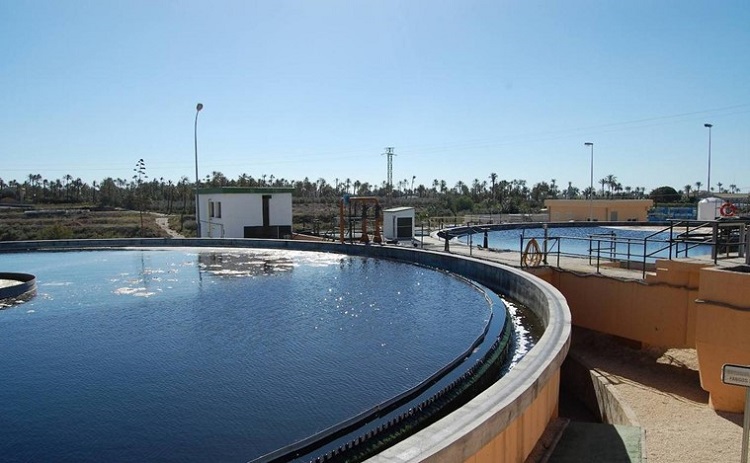
The MICROMANAGE project, partially funded by the Valencian Innovation Agency and the European Union through the FEDER program, and involving LABAQUA, the University of Alicante, and the company iGLS S.L., leverages new technologies to improve water safety control plans that will help comply with the new European regulations on reuse. The implementation of innovative tools for the rapid microbiological assessment of reclaimed water brings together two cutting-edge technologies:
1. Massive sequencing of nucleic acids (metagenomics) to reveal the microbial composition and genetic content of environmental samples.
2. Microfluidic qPCR, which enables the simultaneous screening of up to 192 marker genes in several water samples.
In summary, these two combined technologies allow the identification of a much wider range of viruses and bacteria than traditional solutions, with greater sensitivity and speed. These genetic analysis techniques will provide valuable information about water quality and advanced identification of potential biocontaminants, with a pioneering preventive approach.

-
DAIAD
DAIAD (http://daiad.eu/) it is an initiative supported by the Seventh Framework Programme of the European Union, carried out together with research centers, NGOs, and Greek, Swiss, German, and British companies. As a result of the project, the Amphiro b1 device was developed, which was awarded the Innovation Radar Prize by the European Commission in the "Tech for Society" category. The Amphiro shower monitor, together with the remote reading meter, helps citizens become aware of their water consumption. The devices connect to smartphones and keep a record of the user's consumption, allowing for the identification of trends and making comparisons. Along with the meter, an app and a web platform were created for monitoring water and energy (hot water) consumption in the home. Additionally, and importantly, a study was conducted on the effect of different information and awareness strategies on consumption through the app. This project had the voluntary participation of more than one hundred households in Alicante who tested the system for a year, along with the collaboration of several NGOs from Alicante.


-
Public Procurement of Innovation, a project supported by the Valencian Innovation Agency
Aguas de Alicante is a pioneering entity in the development of activities related to Public Procurement of Innovation (PPI), thanks largely to the support of the Valencian Innovation Agency (AVI), now integrated into IVACE+i.
Learn more about Public Procurement of Innovation (PPI). -
European project B-Watersmart
Developing technologies and approaches for a circular economy in the water sector to reduce consumption, improve the recovery and reuse of water resources, and increase efficiency is the goal of the B-WaterSmart project, a consortium of 35 European entities from various fields that are implementing these solutions in six coastal cities and regions under the slogan “Building a water-smart society and economy.”
Its objective is the development of technical and digital solutions, as well as business models that enable the acceleration of the transformation toward a society and economy based on smart water management, through the reduction of freshwater use, the recovery and reuse of resources, and increased efficiency in water use.
B-Watersmart: promoting the transformation towards smart water management in the coastal regions of Europe
Six coastal regions of Europe serve as “laboratories” for the project. Among them are Bodø (Norway), Flanders (Belgium), Lisbon (Portugal), East Frisia (Germany), and Venice (Italy), along with Alicante. Cetaqua (Water Technology Center) is the coordinator of the Alicante Living Lab, the first innovation space in Spain for water reuse and the identification of circular economy opportunities in the region. Aguas de Alicante, in addition to testing a wide range of innovative technologies to improve the sustainability of its Rincón de León treatment plant through resource recovery and the circular economy, also acts as a link between stakeholders in the field of reclaimed water.
An example of these technological advances are the pilot plants for electricity generation: through codigestion, using an anaerobic digester installed at the Rincón de León WWTP, where mixtures of sludge produced at the WWTP are treated together with food waste with the aim of increasing biogas production and thus boosting electricity generation to supply the treatment plant itself. Or through a picoturbine; the installation of a turbine with an innovative design (vortex turbine) at the Monte Orgegia WWTP, which takes advantage of a small hydraulic drop present at the WWTP. The energy produced will be utilized thanks to the installation of batteries for its storage. On the other hand, there is the pilot plant for the valorization of the brine generated at the Rincón de León desalination plant by manufacturing sodium hypochlorite and increasing the volume of reclaimed water. Or the pilot plants for nutrient recovery (used in the manufacture of advanced fertilizers): CEVAP, a low-temperature evaporator for recovering nitrogen (in the form of ammonium salts) from the by-product stream of sludge dehydration at the WWTP. The aim is for the recovered products to be used by a local fertilizer company for agricultural use, helping to realize the concept of a circular economy.
The experiences of all these Living Labs are, in turn, supported by the parallel development of digital tools that serve as a foundation for identifying and implementing circular economy solutions and, ultimately, help diagnose the existing situation, make objective decisions, and make the most of available opportunities.
Alicante’s participation and involvement in the B-WaterSmart project, as well as the organization and hosting of its plenary meeting, which brought together a hundred project consortium representatives, help position the city at the forefront of innovation in the water cycle, once again demonstrating its commitment to resource sustainability.
This project has received funding from the European Union’s Horizon 2020 research and innovation programme under grant agreement No 869171.
-
LIFE MERLIN
The process of treating wastewater requires intensive use of electrical energy. Therefore, increasing energy self-sufficiency is one of the challenges currently faced by wastewater treatment plants. To achieve this goal and thus promote the sustainability of treatment plants, Aguas de Alicante is implementing an innovative technological solution thanks to the European project LIFE MERLIN.
LIFE MERLIN, an innovative solution in Spain to produce renewable energy from waste
The LIFE MERLIN, solution, which will be implemented at the Monte Orgegia wastewater treatment plant (Alicante), managed by Aguas de Alicante, will improve the performance of the plant’s anaerobic digestion process and, consequently, the production of biogas and energy generation. This solution combines the pretreatment of sludge from urban wastewater with an anaerobic co-digestion process, adding waste from food companies, and it will be optimized in real time thanks to digital solutions developed within the project framework. A second pilot will be developed at the Murcia Este treatment plant. The pilots will maximize biogas production, which can subsequently be used as an energy source for the operation of the facilities themselves.
In addition to contributing to the decarbonization of processes at various treatment plants, the LIFE MERLIN project will promote the revalorization of sewage sludge and industrial waste through the anaerobic co-digestion process, thus fostering a circular economy solution and contributing to a more environmentally sustainable region.
Ultimately, LIFE MERLIN will make a significant contribution to achieving the objectives of the European Renewable Energy Directive (2018/2001/EU), which establishes that 42.5% of energy produced in Europe should be renewable by 2030.
The project, coordinated by the Water Technology Center (CETAQUA), is part of Aguas de Alicante’s goal to transform treatment plants from processing facilities into eco-factories that generate new resources.
Construction of codigestion facilities and cosubstrate discharge at Monte Orgegia WWTP
LIFE MERLIN is a European project co-financed by the LIFE Programme (LIFE23-CCM-ES-LIFE MERLIN 101158094), the European Union’s funding instrument for the environment and climate action. The general objective of LIFE is to contribute to the implementation, updating, and development of EU policy and legislation on environment and climate by co-financing projects with European added value. The opinions and views expressed belong solely to the author or authors and do not necessarily reflect those of the European Commission or CINEA. Neither the European Commission nor the granting authority can be held responsible for them.
Total budget of the LIFE MERLIN project: €3,520,263.01
Partners: Aguas de Alicante, LABAQUA, CETAQUA, CREATECH, Aguas de Murcia
Aguas de Alicante's budget: €1,065,881
Duration: September 2024 - August 2028
LIFE23-CCM-ES-LIFE
MERLIN 101158094
More information at https://www.cetaqua.com/merlin/


